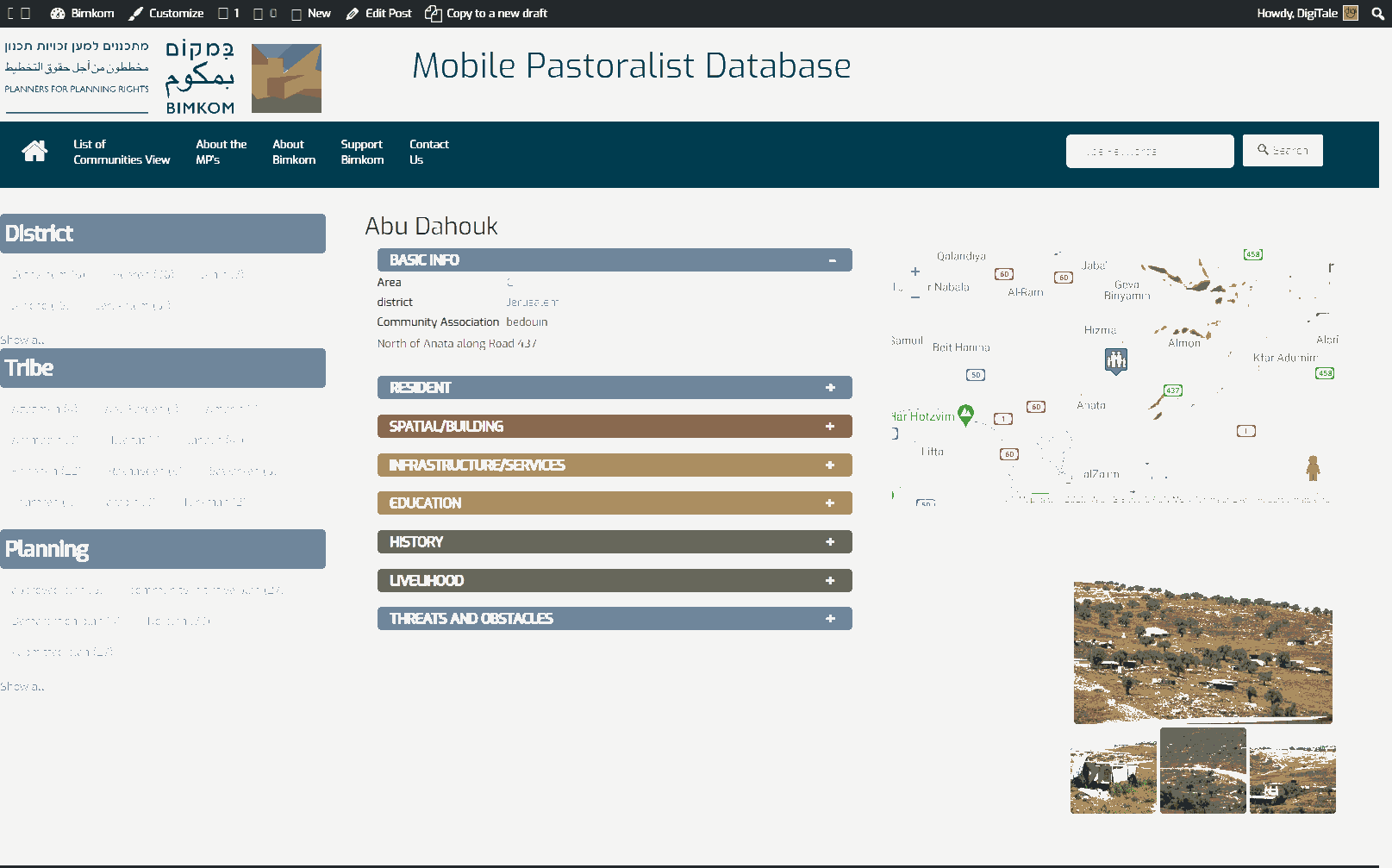
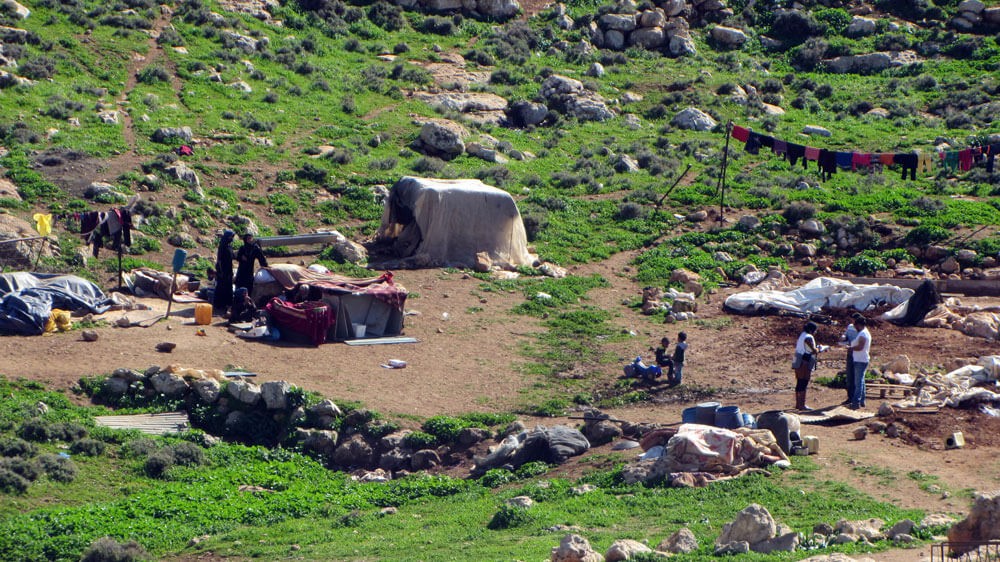
Current location is in a shallow valley overlooked by a military camp.
Ein ar Rashash
Resident
Number of Families
8
Tribe
testing the tooltip
Jahalin
Sub-Tribe
Zawahreh
Names of Families
Zawahreh
Refugees
non-official refugee status
Spatial/Building
Land Ownership
- private
- lease
- state owned land
Land Ownership - details
The community pays a yearly rent for their lands to their private owners.
Planning
No plan
Structure Type
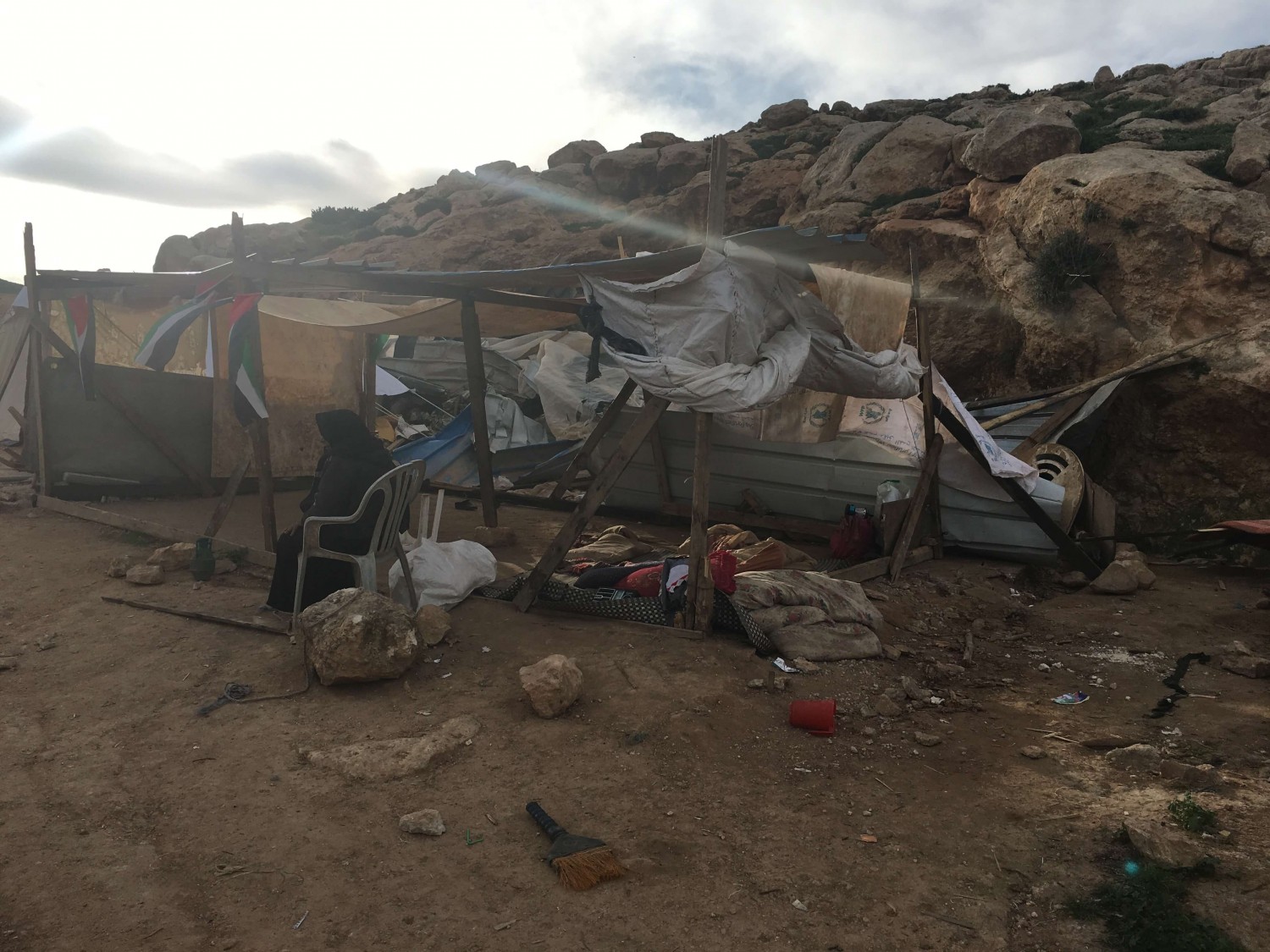
tin shack
Infrastructure/Services
Access to Community
- private vehicle
- 4X4 vehicle
Water Access
water tank
Water Access - details
A water tank that can support a family for three days costs 20 NIS. The community buys the tanks from Duma.
Electric Connection
Electric Connection - details
Solar panels were provided by Comet-ME
Health Care
clinic in distant town/village
Health Care - details
The community uses the health center in Taybeh, but the closest fully serviced hospital is al-Hakoumi in Ramallah or Rafidiya in Nablus. In the case of serious emergencies the community members will receive treatment and transportation from the Israeli military in the adjacent base.
Location of Services
Duma
Education
Kindergarten
No
Location of School #1
Duma
general description [school #1]
- Boys
- Girls
- Primary school
- Middle school
- High School
Distances to schools [school #1]
more than 5001 meters
Time to schools [school #1]
over 1 hour
Schools - details
Approximately 30 children currently go to school in Duma (10 km away). They are not allowed to build a school in Ein ar-Rashash. The community asked the Ministry of Education for a school bus, but the Ministry said they would only send a bus to the junction with a paved asphalt road. There have been a number of students who attended university (Birzeit or Al-Quds al-Maftuha), but many left their studies mainly due to the difficulty of transportation.
Travel to school [school #1]
- difficult walk
- donkey
Accessibility to school [school #1]
8
History
History
The community was expelled from Tel Arad in 1948. They settled in Tel Khalil and migrated from place to place until they settled at Ein ar-Rashash. If they were to move from their current location their return would denied by the Civil Administration.
livelihood
Seasonal Movement
yes
Seasonal Movement - details
The community moves within their territory, down in the valley during the winter and up the hills in the summer.
Community Initiatives
no Initiatives
Other Occupation
- shepherding
- herd without shepherding
Main Occupation
- shepherding
- herd without shepherding
Woman's Occupation
- taking care of the herd
- agriculture
General Livelihood - details
The community has approximately 1500 sheep in total and sheep products are sold to al-Mughayir and Ramallah. The herds are the community's only source of income.
Threats and obstacles
Threats and Obstacles
fjfxjsfjsyjsyj
firing zone/closed military zone
Number of Demolition Orders
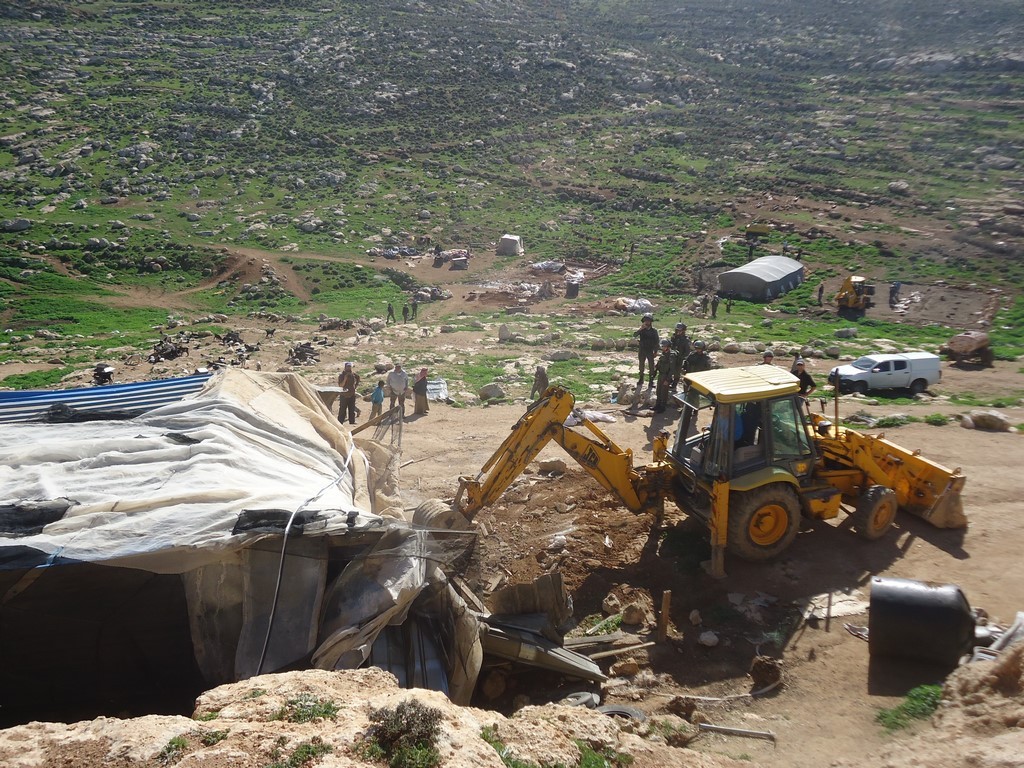
15
Number of Demolitions
11
Demolitions - date of update
September 17, 2010